Editor's comment on Pascual Serrano's excellent report (below): At the end of May, 2007, the broadcasting license for RCTV will expire in Venezuela. RCTV was the television-spearhead that tried to overthrow the Venezuelan government in a coup d'etat attempt against President Chavez in April, 2002. Almost any other government in the world would have stripped them of their license at that time and jailed (or worse) the U.S.-funded RCTV executives who openly promoted the coup. But the Chavez administration didn't do that just as they didn't immediately imprison other coup-leaders.
Instead, the Chavez administration allowed RCTV to continue broadcasting disinformation (lies) in attacks against the government on a daily basis since 1998. If RCTV ever had any pretense of journalistic integrity (doubtful) they surrendered it a long time ago. In my numerous visits to Venezuela I bore witness to the raw hatred and pro-violence messages that spewed from RCTV throughout the day and night. Now the end of the RCTV license to broadcast is ending. The Chavez administration decided not to renew their license, just as other governments have not renewed over 600 media licenses this year throughout the world.
Recently, in our living room in Boston, we have been watching Globovision, the only Spanish-speaking station we can get on our TV cable plan. Globovision is another Chavez-hating television conglomerate and they are now organizing disgruntled RCTV media barons and reporters to foment more bitterness and hatred among the minority opposition - all under the pretext of "Freedom of Expression". The people of Venezuela are concerned about the possibility of more media-induced violence at the end of this month when RCTV's license will not be renewed. But this time, our sources in Caracas say that the government is ready.
If media-spawned violence against the people of Venezuela occurs again, all should know the direction in which to point their finger. The people of Venezuela are fed up with the constant bombardment of negative images of their country and incitations to violence, promulgated by the private media corporations. They deserve responsible media and they are beginning to get it through Telesur and the new television station (Channel 2) which will fill RCTV's expired license. Pascual Serrano's brilliant report, The Right to Inform and be Informed, explains the foundations being laid for the new, democratic media in Venezuela and throughout Latin America. - Les Blough, Editor
Insurrection against media dictatorship is on the way
by Pascual Serrano
 |
|
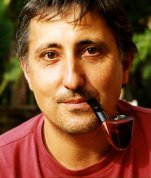
Pascual Serrano |
I have attended two exciting events on information and the media. They took place one after the other in Caracas (18, 19 and 20 of May) and in the beautiful Bolivian city of Cochabamba (23 and 24 of May). The first one - “The Right to Inform and to be Informed - A Debate About the Ownership of Media - was organized by the television channel Telesur.
During three days in Caracas more than fifty journalists, media personnel and academics immersed themselves in the social debate that is currently taking place in Venezuela over the government’s decision not to renovate a private television network’s license. They analyzed the role of the State, how mass media are managing information and what has to be done to develop civic participation and public ownership of media.
Then Cochabamba held the V World Encounter of Intellectuals and Artists in Defence of Humanity under the title “In Defence of Truth and Against Media Manipulation.”
The two meetings were the expression of a similar feeling: the indignation of citizens and intellectuals over a communicational model controlled by an economic elite. The general perception was that after monopolizing for their own profit the noble concepts of freedom of press and freedom of speech, they had emptied them of any meaning by putting them under their exclusive executive control with regard to who can and cannot spread messages through the media and control over what messages can and cannot be spread. These rights don't mean anything to millions of people because they will never be able to use media to communicate with their fellow citizens and nobody will guarantee them that media are truthful and respectful to their right to be informed. As one of the speakers said, “We are before one deaf who is speaking to millions of mutes.”
But the matter is even more serious. Anytime a State seeks to apply measures that guarantee the public use of media-related elements - Hertzian space, diffusion of social messages, etc. - or tries to punish media lies, deception, lack of information or their use as a mere political platform to reach power (even through destabilization, violence and coup d’état), such a State is accused of attacking freedom of speech.
A Ukrainian journalist talked in Cochabamba about the shameful situation of media in his country, where half of journalist’s revenues come from corporate bribes. As revolting as this may sound it is not very different from our current legal model, where approximately fifty percent of media revenues come from advertisements. The method is similar: it conditions content by the payment of money which is in turn, indispensable for media operation and journalists' survival.
These two meetings witnessed a thunderous roar screaming that “the time of media democratization, civic participation and the rule of law [in media]”. In the current situation it is normal that a minister supported by millions of votes doesn't have access to media, that a mass popular demonstration is silenced if media owners are against it or that any attempt to demand from media a real commitment to offer truthful information is answered with the accusation of State interventionism and an attack on the freedom of speech.
As usual, while dozens of alternative and community media were highlighting the events in Caracas and Cochabamba, mass media reserved their best opinion pages to criticize their conclusions. For example in it's editorial, Bolivian newspaper, Los Tiempos declared “Meetings and seminars are being promoted by Venezuela and Cuba in order to question media and to prevent them from criticizing governments.”
It is evident that the camps of future confrontations are defined. On one side there are big media owned by powerful companies affiliated with institutions like the Interamerican Society of Press (SIP in Spanish) in the Latin American subcontinent. These associations pretend to be defenders of freedom of press but are financed by the US government to charge against disobedient governments; such is also the case with Reporters without Frontiers. They are also close to governments which feel comfortable inside an informative model that doesn't give space to ideas against neo-liberalism or "free market economics"; neither ever accuse the US or the EU of military intervention and looting of poor countries nor do they defend the emergence of popular processes in Latin America.
On the other camp, facing this conservative axis there are mass organizations of journalists aware of the need to avoid any dependence on managerial decisions: one such example is the Latin American Federation of Press (FELAP in Spanish). There are also informative projects like Al Jazzera or Telesur as alternatives to the current informative model. There are plenty of communication professionals ready to denounce manipulations, lies and conflict of interests with media, as well as governments that understand the necessity to democratize media in order to avoid destabilization by the media. All these - journalists, informative projects and besieged governments - have said enough! They are beginning to rise up against a media dictatorship that silences the voice of people who criticize the prevailing economic system that prevents any erosion of existing media privileges, arrogating to itself the right to topple and establish governments.
This next Sunday, May 27, the private Venezuelan network RCTV will lose its concession to broadcast and the signal will become public. The neo-liberal axis is promoting a strong campaign against Hugo Chávez’s government accusing him of attacking freedom of speech. However, Chavez is only defending the public use of Hertzian space and the State authority to distribute concessions, as is the case in all countries of the world. This is only the beginning of a hard battle between a media dictatorship that is losing its power and a civic insurrection that is demanding democracy and participation in information with the help of honourable and popular governments.
Spanish journalist Pascual Serrano is a founding member of Rebelión and editorial adviser to the Latin American television channel Telesur.
Spanish journalist Pascual Serrano is a founding member of Rebelión and editorial adviser to the Latin American television channel Telesur.
| Original Source in Spanish: Rebelión |
|
|
|
This translation is on Copyleft for any non-commercial use: verbatim copy of the translation in its entirety may be freely reproduced, respecting its integrity and citing the source, the author and the translator. |